
Last Updated: November 11, 2026
Quick Summary
A fiberglass pool should be built by a professional contractor unless you have heavy-equipment experience, dependable site access, and a simple, flat lot. Manufacturer-authorized dealers, independent pool builders, and general contractors all install them, but you must confirm who holds the shell warranty versus the workmanship warranty.
- Manufacturer-authorized dealers are trained on specific shell systems and may offer extended shell warranties.
- Ask how many fiberglass pools a contractor installed in the past 12 months and request three nearby references.
- Crews compact the gravel base level within a tight tolerance, often less than an inch across the footprint.
- Backfill is compacted in lifts of 12 to 18 inches with water in the pool as a counterweight.
- Get written answers on permits, excavation, crane delivery, plumbing, electrical, backfill, and landscaping restoration.
Table of Contents
- Who Should Build a Fiberglass Pool: The Short Answer
- What a Fiberglass Pool Contractor Actually Brings to the Job
- The Fiberglass Pool Installation Process, Step by Step
- Frequently Asked Questions
Who Should Build a Fiberglass Pool: The Short Answer
A fiberglass pool is a one-piece shell that must be set level, on stable soil, with correct plumbing and backfill, and mistakes at any stage are expensive to reverse.
The honest exception is narrow: a homeowner with heavy-equipment experience, dependable site access, and a simple, flat lot may consider DIY. For everyone else, professional installation is the safer path.
If you are still weighing pool types, it helps to see how a gunite build compares before you commit: Is a Gunite Pool Worth the Investment?.
What a Fiberglass Pool Contractor Actually Brings to the Job
A fiberglass pool contractor brings excavation experience, shell-handling equipment, and accountability for the finished result. The type you hire determines who is responsible for each phase.
Compare installer types before you commit
- Manufacturer-authorized dealers are trained on specific shell systems and may offer extended shell warranties, but pricing may be higher and availability limited by region.
- Independent pool builders may install shells from multiple manufacturers; verify their fiberglass track record and ask for references from fiberglass projects completed in the last two years.
- General contractors often subcontract the pool installation, confirm who holds the shell warranty versus the workmanship warranty.
- DIY installation is only realistic with heavy-equipment experience and a simple, flat lot; mistakes in base preparation or backfill can crack the shell.
Vetting checklist for any contractor
Before signing a contract, ask these questions and get written answers:
- Experience with fiberglass – How many fiberglass pools have you installed in the past 12 months?
- Subcontractors – Which phases will be subcontracted, and who is accountable for each?
- Warranty responsibility – What does the shell warranty cover, who honors it, and what is the workmanship warranty period?
- Scope of work – Does your bid include permits, excavation, crane delivery, plumbing, electrical work, backfill, and landscaping restoration? Get exclusions in writing.
A contractor also coordinates permits, inspections, electrical work, and plumbing, where projects quietly go wrong. Review our background and local credentials, and see the pool services available across the area for ongoing care after the build.
The Fiberglass Pool Installation Process, Step by Step
The fiberglass pool installation process runs through a predictable sequence of stages. Most delays come from site access and soil conditions, not the shell itself.
- Site evaluation and permits. The contractor checks access, soil, utilities, and local codes, then pulls permits, including a utility locate and a soil assessment.
- Excavation. An excavator digs the pit to the shell’s dimensions plus extra depth for base material; narrow gates or steep slopes may add time and cost.
- Base preparation. Crews lay and compact a gravel base level within a tight tolerance, often less than an inch across the footprint, since an uneven base can cause the shell to flex or crack.
- Shell delivery and placement. A crane lifts the fiberglass shell over the house or fence and sets it into the pit; crane requirements depend on shell size and weight, distance from the street, and overhead obstructions.
- Plumbing and circulation. PVC pipe, the circulation system, and electrical work are connected and tested, including bonding and grounding per local code.
- Backfill and stabilization. Crews backfill in stages with water in the pool as a counterweight, using washed gravel or sand compacted in lifts of 12 to 18 inches; poor compaction can cause settling that cracks the shell.
- Startup. The pool is filled, equipment commissioned, and water chemistry balanced, and the contractor should walk you through the pump, filter, heater, and any automation.
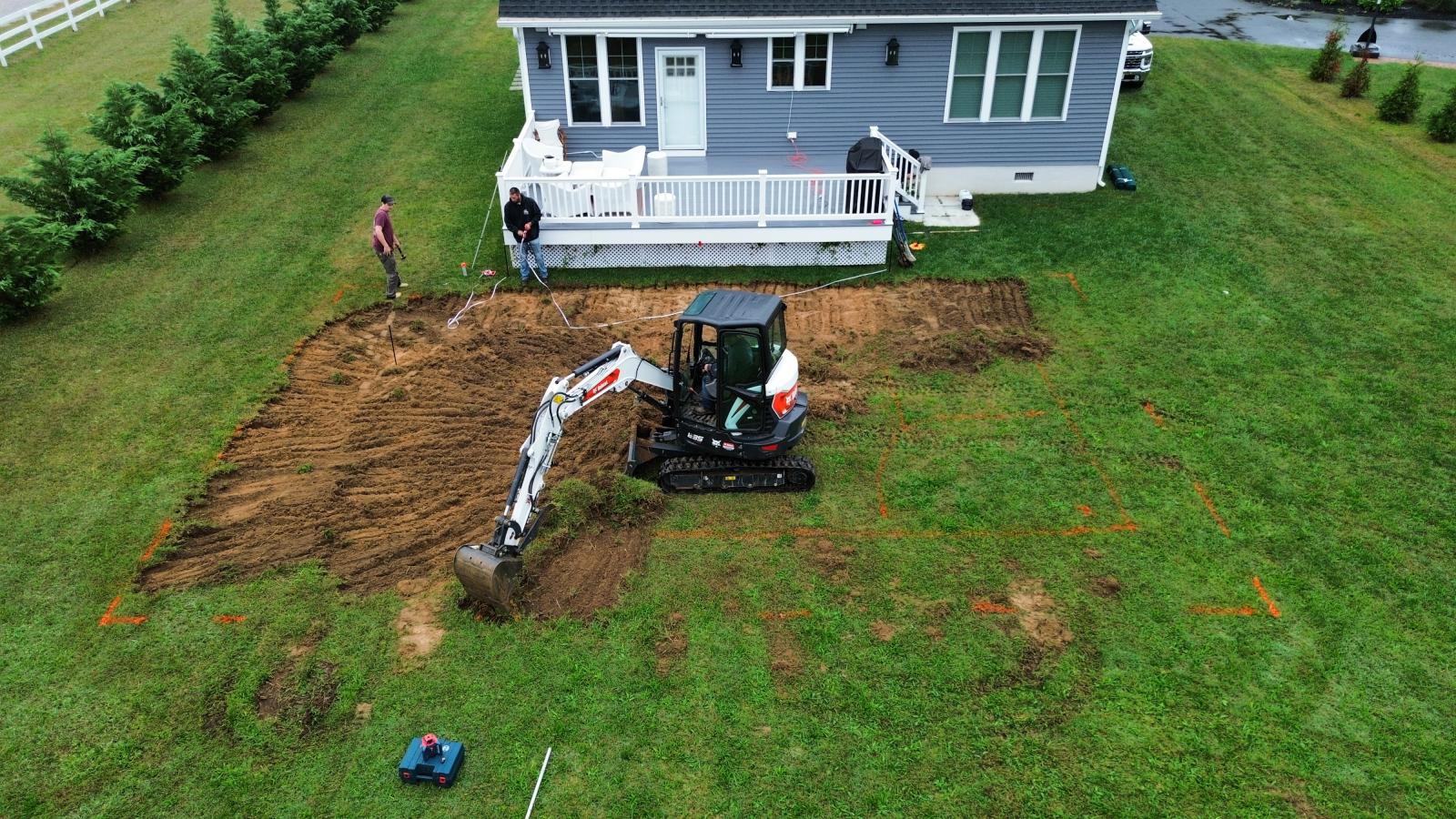
See completed installations in our gallery to picture the end result, and contact us when you are ready to talk through your property.
Here is the installation sequence a contractor follows, along with what can go wrong at each stage.
|
Step |
What happens |
Risk if done poorly |
|---|---|---|
|
Site evaluation and permits |
Checks access, soil, utilities, codes; pulls permits |
Delays from site access and soil conditions |
|
Excavation |
Digs pit to shell dimensions plus base depth |
Narrow gates or steep slopes add time and cost |
|
Base preparation |
Gravel base compacted level within tight tolerance |
Uneven base can make shell flex or crack |
|
Shell delivery and placement |
Crane may lift shell over house or fence into pit |
Crane needs depend on size, weight, obstructions |
|
Plumbing and circulation |
PVC, circulation, electrical connected and tested |
Pressure testing before backfill is critical |
|
Backfill and stabilization |
Backfill in stages with water as counterweight, 12 to 18 inch lifts |
Poor compaction can cause settling that cracks shell |
|
Startup |
Pool filled, equipment commissioned, chemistry balanced |
Contractor should walk through pump, filter, heater, automation |
Deciding who should build a fiberglass pool comes down to risk. A shell set on poor soil or lifted without the right equipment can fail in ways that are costly to fix. Peerless Pools is locally owned, licensed and insured, and has served shore homes and rentals since 2016, with trained Pentair specialists on staff. We handle weekly care, seasonal openings and closings, and equipment upgrades so your pool stays ready. Get started with Peerless Pools and request a quote for your project.
Frequently Asked Questions
What qualifications should a fiberglass pool installer have?
Look for a licensed and insured pool professional, and get everything in writing before work starts. Peerless Pools is a trained Pentair specialist, licensed and insured, with expertise in Pentair equipment installation and repair.
Can I install a fiberglass pool myself?
DIY fiberglass pool installation is possible in theory, but the risks are steep. Heavy machinery and precise shell placement demand experience, and a mistake can damage the shell. Unless you have excavation and pool construction experience, hiring a qualified professional is the safer choice.
How long does fiberglass pool installation take?
The fiberglass pool installation timeline typically runs a few weeks from excavation to startup, though weather, permits, and site access can stretch it. The shell itself often goes in quickly once the hole is ready, but backyard preparation, plumbing, electrical work, and backfill each add days. Ask your contractor for a written schedule with project stages so you know when to expect the crane, the inspections, and the water. A realistic timeline upfront prevents surprises later.
