
Last Updated: November 8, 2026
Quick Summary
A gunite pool is worth the investment if you plan to stay long term and want a custom shape that fits an irregular or tight lot. It costs more and takes months to build, but the concrete shell is durable and can be patched and replastered over time.
- A gunite pool is sprayed onto a steel-reinforced shell and shaped on site, so it can fit almost any yard.
- Fiberglass installs in weeks with a lower upfront price, but factory molds limit shape options.
- Published estimates put a small custom gunite pool at roughly $60,000 to $95,000.
- Permits, inspections, and weather typically cause more delay than the physical construction work.
- Skip gunite if you need a fast, low-cost install for a simple layout.
Table of Contents
- What a Gunite Pool Is and How It Differs
- Gunite Pool vs Fiberglass: Which Shell Fits Your Property
- The Gunite Pool Construction Process, Step by Step
- What Drives Gunite Pool Cost
- Permits, Zoning, Access, and Drainage Before You Dig
- Equipment and Energy-Efficiency Decisions
- Gunite Pool Maintenance and Long-Term Ownership Costs
- Gunite Pool Pros and Cons for Shore Homes
- Planning Your Gunite Build with Peerless Pools
- Frequently Asked Questions
What a Gunite Pool Is and How It Differs
A gunite pool is an in-ground swimming pool built by spraying a dry concrete mix onto a steel-reinforced shell, then shaping it on site. That process lets a builder form almost any shape, depth, and feature the yard allows. This question comes up often from shore homeowners weighing a big, permanent investment against a simpler pool type.
The key difference comes down to how the shell is made. A gunite pool is poured in place, so the structure is tied to the site. Fiberglass and vinyl pools arrive as pre-made shells or liners dropped into an excavation.
That single fact drives everything else: design freedom, build time, and repair options later on.
Gunite is also called shotcrete in some regions. The two terms describe nearly the same sprayed-concrete method.
Gunite Pool vs Fiberglass: Which Shell Fits Your Property
Fiberglass is generally faster to install and usually has a lower upfront price. A fiberglass shell is molded in a factory and set in a matter of days or weeks. Gunite wins on flexibility. If your yard has an odd slope, a tight setback, or a shape you have in mind, a gunite pool can be formed to fit it.
Here is how the two compare on the points that matter most:
|
Factor |
Gunite Pool |
Fiberglass Pool |
|---|---|---|
|
Shape options |
Any custom shape |
Factory molds only |
|
Build time |
Months |
Weeks |
|
Surface |
Plaster or tile finish |
Gel coat |
|
Repairs |
Patch and replaster |
Patch gel coat |
|
Best for |
Custom yards, long-term homes |
Fast installs, simple layouts |
For a shore property with an irregular lot, gunite often fits better. For a quick seasonal rental upgrade, fiberglass can make sense.
Watch out: choosing a shell type before checking your lot’s setbacks and access can force a redesign later.
The Gunite Pool Construction Process, Step by Step
The gunite pool construction process runs in a set order: excavate, set steel and plumbing, spray the shell, cure it, then finish the surface. Skipping or rushing any stage weakens the structure. Here is the sequence we walk owners through before a shovel hits the ground, with typical durations and the decisions you need to make at each stage.
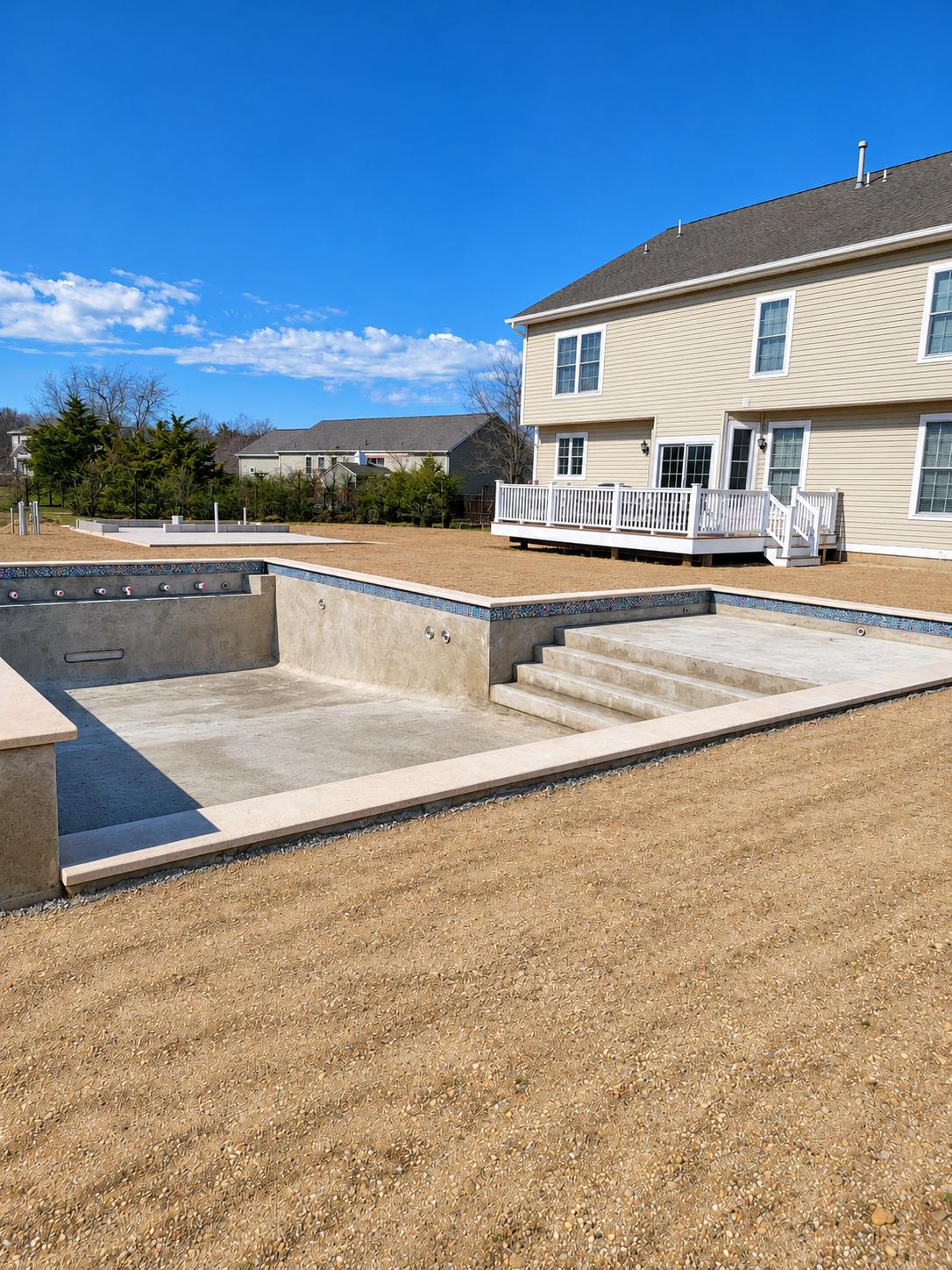
Excavation, Site Preparation, and Soil Conditions
Excavation shapes the hole to the pool design. Crews mark the layout, then dig to the depth and profile the plan calls for. Excavation time depends on the project’s size, access, and soil conditions. Soil conditions matter here. Sandy or loose soil may need extra support, while rocky ground can slow digging and may require a breaker or additional labor.
Site preparation also covers access. A crew needs room for equipment and trucks, and a clear path at least as wide as the largest machine. Tight lots can complicate this, so plan for it early. Before digging, confirm utility locates are complete and that the excavation contractor has a spoil-placement plan for removed soil.
Decision deadline: Finalize pool shape, depth profile, and equipment pad location before excavation begins. Changes after digging are expensive.
Owner checkpoint: Walk the marked layout before digging. Confirm setbacks from property lines and structures match the approved plan.
Rebar, Plumbing, and the Gunite Application
Workers build a steel framework of rebar that gives the shell its strength. Plumbing lines for drains, skimmers, and returns get tied in before spraying. Then a crew sprays the gunite mix onto the steel with a hose, building up the wall thickness. Rebar and plumbing work is scheduled around the project, and the gunite spray is completed as a discrete stage of the build.
The spray gun packs the material tightly around the rebar. That bond is what makes the shell durable. Wall thickness and rebar spacing should follow the engineered plan for the specific project.
Decision deadline: Lock in skimmer, return, drain, and light locations before plumbing is tied in. Adding a line later means cutting concrete.
Owner checkpoint: Before gunite is sprayed, confirm plumbing is pressurized and rebar is tied and spaced per plan. Ask for photos of the plumbing before it is covered.
Curing, Inspection, Tile, Coping, and Plaster
The shell must cure before finishing, allowing the concrete to reach full strength before finish work begins. An inspection then checks the structure before tile, coping, and plaster go on.
- Tile adds a waterline finish and style
- Coping caps the pool edge
- Plaster forms the smooth interior surface
Surface texture and finish choice affect both looks and feel underfoot. This stage is where the pool starts to look finished. Weather and material availability can extend the timing of tile, coping, and plaster work.
Decision deadline: Select tile, coping, and interior finish before the shell is complete. Material lead times can run several weeks, and late selections stall the schedule.
Owner checkpoint: Inspect the shell for cracks or voids before finish work, confirm tile layout and coping alignment, and review the plaster finish under good light before the pool is filled.
What Can Delay the Schedule
A common pattern is that permits, inspections, and weather drive more delay than the physical work. Rain can halt excavation and gunite spraying, and inspection scheduling can add days. Builders typically build float into the schedule for these, but owners should ask for a stage-by-stage timeline in writing and know which decisions are on their critical path.
What Drives Gunite Pool Cost
Gunite pool cost depends on size, site conditions, finishes, and equipment, not a single flat number. Published estimates vary widely for that reason. Treat any online range as a starting point only. The more useful exercise is to ask for a bid that separates what is included from what is excluded, so you can compare proposals line by line.
What a Bid Should Itemize
A clear gunite pool bid typically breaks out these categories:
- Excavation and soil haul-off
- Steel rebar and plumbing
- Gunite shell and curing
- Tile, coping, and interior finish
- Equipment package: pump, filter, heater, controls, lights
- Electrical and gas connections
- Permits and inspection fees
- Site work: drainage, decking, fencing, landscaping
Ask each bidder to state allowances for tile, coping, and finishes, and to list exclusions such as decking, fencing, landscaping, and utility upgrades. A low headline number often reflects a narrow scope.
What Moves Your Number Most
- Pool size and depth
- Soil and access conditions
- Tile, coping, and plaster choices
- Equipment and heating
- Permits and site work
- Decking and fencing square footage
Peerless Pools quotes each project based on its site details. Contact us for a quote.
Long-Term Ownership Costs Beyond the Build
Installation is the largest single cost, but ownership adds up over the years. A practical budget includes:
- Routine chemicals and water testing
- Electricity for pump, heater, and controls
- Seasonal opening and winterization
- Equipment service and eventual replacement
- Replastering when the interior finish wears
Efficiency choices at build time, a variable-speed pump, a properly sized filter, a heater matched to how often you swim, and a cover, can lower operating costs over the life of the pool. The right time to make those decisions is before equipment is ordered, not after the first utility bill.
Watch out: Comparing bids on the headline price alone can hide differences in equipment grade, finish allowances, and excluded site work that show up later as change orders.
Permits, Zoning, Access, and Drainage Before You Dig
Permits and zoning come before construction, and they can reshape the plan. Local rules govern setbacks, fence requirements, and how close a pool can sit to property lines. Drainage matters too, since a pool changes how water moves across a lot.
A pre-construction checklist keeps this stage organized:
- Confirm zoning setbacks and lot coverage limits
- Check permit requirements with the local building office
- Plan equipment and truck access to the dig site
- Map drainage and runoff away from the pool
- Confirm fence and safety requirements
- Review utility locations before digging
A common mistake is ordering the dig before permits clear. That stalls the schedule and can add cost.
Equipment and Energy-Efficiency Decisions
Equipment choices affect daily running costs more than most owners expect. A filtration system, pump, heating, and controls all work together, and efficiency varies by model. Choosing efficient equipment up front can lower long-term energy use.
Pentair systems are one option Peerless Pools installs and services. You can review the Pentair pool equipment we install and service to see pumps, heaters, automation, lights, and salt systems.
For shore homes, heating deserves extra thought. A pool that sits unused in cool shoulder months wastes equipment. Match the heater to how often you actually swim.
Gunite Pool Maintenance and Long-Term Ownership Costs
Gunite pool maintenance is modest month to month but adds up over the years. Routine care covers water balance, filtration, cleaning, and seasonal openings and closings. Longer-term, plaster eventually wears and needs replastering, and equipment gets replaced over time.
Budget for these ownership costs beyond the build:
- Weekly water testing and chemical balance
- Seasonal opening and winterization
- Pump and filter upkeep
- Eventual replastering
- Equipment replacement over the years
For owners who are away much of the year, consistent service helps protect the investment. You can review the pool services available for shore homes to see weekly care, openings, closings, and repairs.
Gunite Pool Pros and Cons for Shore Homes
Gunite pools can suit shore properties well, but they are not the right call for every owner. The pros are real, and so are the trade-offs.
Pros:
- Custom shapes that fit odd or tight lots
- Durable concrete shell
- Tile and finish options
- Repairable surface over time
Cons:
- Higher upfront cost
- Longer build timeline
- Surface needs replastering eventually
Heating is a common shore-home question. You can explore Pentair gas pool heaters for shore pools to understand options suited to coastal conditions.
Best for: owners planning to stay long term who want a custom pool. Skip if: you need a fast, low-cost install for a simple layout.
Planning Your Gunite Build with Peerless Pools
Planning starts with your lot, your goals, and your budget. Access, setbacks, and how you plan to use the pool all inform the shell type and finish recommendation.
You can browse our gallery of pool construction to judge the work for yourself. When you are ready to talk through your project, contact us about your build.
Building a gunite pool is a long-term decision with real money behind it, and the details matter more than the headline number. Peerless Pools is locally owned and has served Cape May County since 2016, with trained Pentair specialists. We provide weekly care, seasonal openings and winterizations, and equipment upgrades. Get started with Peerless Pools and plan a build that fits your property and your budget.
Frequently Asked Questions
What is the typical cost to build a gunite pool?
Gunite pool cost depends on size, site conditions, finishes, and equipment. For pricing on your project, contact Peerless Pools for a quote. Treat any online range as a starting point, not a quote. Access, soil, drainage, finishes, and equipment all move the number, so ask for a site-specific estimate before you budget.
How long does it take to build a gunite pool?
Build timelines vary with the project, and the schedule depends on the factors below. Weather, inspections, and finish schedules cause most delays. Plan decision deadlines for tile, coping, and plaster early so material lead times do not stall the shell curing stage.
How much maintenance does a gunite pool require?
A gunite pool needs routine water testing and chemical balancing, skimming and brushing, filter cleaning, and seasonal opening and winterization. The plaster interior finish slowly wears and typically needs replastering every several years, which is the main long-term cost difference from a fiberglass shell. Consistent weekly care protects the surface and equipment and delays that replastering expense.
Are gunite pools more expensive than other types of pools?
Gunite usually costs more up front than a fiberglass pool because the shell is built on site with rebar, plumbing, sprayed concrete, curing, and hand-finished tile and plaster. In return you get a custom-shaped pool that fits odd lots, slopes, and tanning ledges. The trade-off is a longer build and periodic replastering, so compare total ownership over time, not just the initial price.
