Last Updated: November 7, 2026
Quick Summary
Winterized pools still need a winter watch program because closing a pool does not mean ignoring it until spring. A scheduled off-season inspection checks the cover, water level, and equipment at regular intervals, since cold weather damage happens quietly and often goes unseen until March.
- A winter watch visit is a short, recurring inspection of an already-closed pool covering the same core checks each time.
- The most common winter mistake is letting rainwater collect on a solid cover, stressing the cover and anchors.
- Shore homes and rentals face wind-driven rain, salt air, and long empty stretches that work against a closed pool.
- Schedule visits on a fixed calendar, keep a written log, and fix small issues in the off-season.
- Peerless Pools has served Cape May County as a locally owned team since 2016.
Table of Contents
- Why Winterized Pools in Cape May Still Need Monitoring
- What a Pool Winter Watch Program Includes
- Pool Winter Damage Prevention for Shore Homes and Rentals
- Frequently Asked Questions
Why Winterized Pools in Cape May Still Need Monitoring
Winterized pools have plumbing and equipment protected from freezing, but closing a pool does not mean ignoring it until spring. A winter watch program is a scheduled off-season inspection that checks the cover, water level, and equipment at regular intervals.
Cold weather does most of its damage quietly: a sagging cover, water level, or freeze-loosened fitting looks fine from the kitchen window, until March.
What a Pool Winter Watch Program Includes
A winter watch visit is a short, recurring inspection of an already-closed pool, covering the same core checks each time.
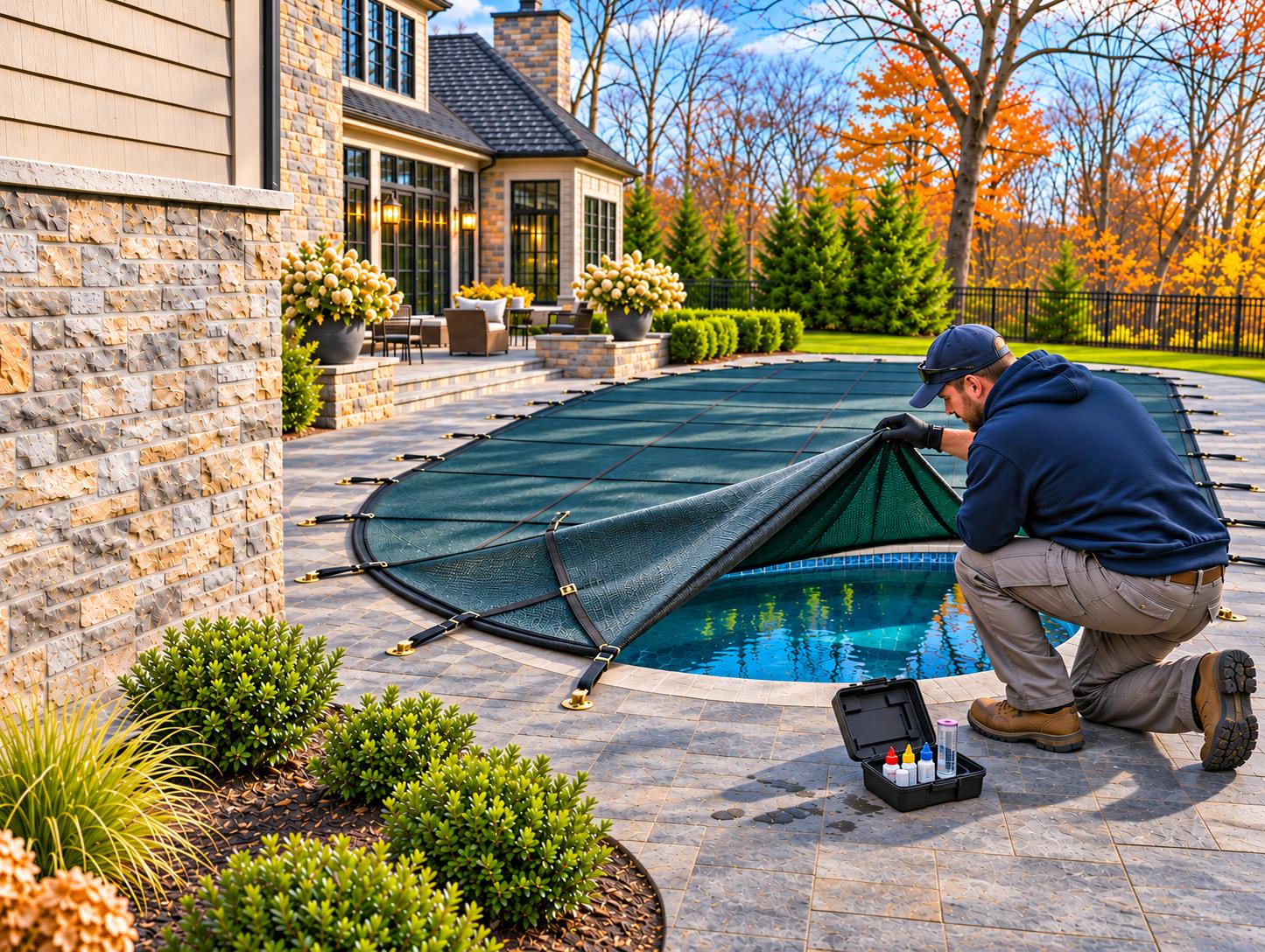
Pool technician checking the water level of winterized pools beneath a secured cover during a cold day.
A typical visit includes:
- Cover inspection. Sagging, standing water, loose straps, seam wear.
- Water level check. Maintain water level below tile.
- Equipment look-over. Pump, filter, heater, and exposed plumbing for leaks or freeze damage.
- Debris removal. Clear excess debris and standing water so cover weight stays even.
- Written notes. Record changes so spring opening starts from facts.
Watch out: the most common winter mistake is letting rainwater collect on a solid cover, stressing the cover and anchors and pulling debris into the pool when it drains.
Each winter watch visit covers the same core checks on an already-closed pool.
|
Check |
What to look for |
|---|---|
|
Cover inspection |
Sagging, standing water, loose straps, seam wear |
|
Water level check |
Not in tile line |
|
Equipment look-over |
Pump, filter, heater, exposed plumbing for leaks or freeze damage |
|
Debris removal |
Clear excess debris and standing water so cover weight stays even |
|
Written notes |
Record changes so spring opening starts from facts |
Pool Winter Damage Prevention for Shore Homes and Rentals
Shore homes and rentals can face a harder winter than year-round residences. Wind-driven rain, salt air, and long empty stretches work against a closed pool, and owners who live hours away cannot see a problem forming.
Prevention comes down to three habits:
- Schedule visits on a monthly basis, not when someone remembers.
- Keep a written log so changes are measured against the last visit.
- Fix small issues in the off-season, before opening-week emergencies.
For the full picture of seasonal care, see our guide to professional pool maintenance. Rentals in use longer into the season can review weekly pool service in Cape May County NJ.
A closed pool is not a finished pool. The owners who reopen clean and on time checked in through the winter instead of hoping. Peerless Pools provides seasonal openings and winterizations, and Pentair equipment service for shore homes and rentals in Cape May County. As a locally owned team serving the area since 2016, we aim to keep the off-season on a schedule so spring is not a surprise. Request a quote from Peerless Pools to discuss your seasonal pool care this season.
Frequently Asked Questions
What should you check on a pool after it has been winterized?
Check the cover for shifting, sagging, or standing water after every storm. Look at the water level under the cover, confirm the pump and filter are off and drained, and make sure plugs are still in place. Walk the perimeter for signs of ice damage or debris buildup. Regular checks on a set schedule matter most for owners who are not on site during the off-season.
How often should a winterized pool be checked during winter?
Most pools benefit from a check every four weeks through the colder months. Vacation and rental properties in Cape May County often sit empty for weeks, so a scheduled winter watch visit catches cover shifts and water issues before they turn into repairs. Ask your provider what interval their program uses and whether storm follow-ups are included.
Can winter weather damage a pool that has already been closed?
Yes. Freezing temperatures, wind, and heavy precipitation can shift a cover, stress a safety cover’s anchors, or let water and debris collect on top. Left alone, those problems can lead to cover failure, water chemistry issues, or equipment damage that shows up at opening. Pool winter damage prevention is mostly about regular inspection, which is why a winter watch program exists for pools that are already winterized.