
Last Updated: November 8, 2026
Quick Summary
A pump that keeps shutting off in summer heat is usually tripping its thermal overload protector, not failing outright. Clear the motor vents, run the pump during cooler morning and evening hours, and shade the equipment pad. If it still trips, stop resetting it and schedule pool pump repair with a qualified technician.
- A thermal trip follows a pattern: the pump quits, then restarts on its own after 10 to 30 minutes of cooldown.
- If the pump stops and stays off until you reset a breaker, that is an electrical fault, not heat.
- Repeated thermal trips can warp windings and turn a cheap fix into a motor replacement.
- Split runtime into two cooler blocks, such as early morning and late evening, to maintain turnover.
- Peerless Pools has served Cape May County since 2016 as a trained Pentair specialist.
Table of Contents
- Why Summer Heat Causes Pool Equipment Failure
- Pool Pump Not Turning On: Diagnosing Power and Electrical Faults
- Pool Pump Humming but Not Starting: What the Sound Tells You
- Pool Pump Keeps Shutting Off: Thermal Trips and Overheating Prevention
- Pool Pump Repair or Replacement: How to Decide
- Schedule Your Pool Pump Repair Before the Next Heat Wave
- Frequently Asked Questions
Why Summer Heat Causes Pool Equipment Failure
A pool pump that shuts off in July is usually not broken. It is protecting itself. Motor windings, capacitors, and drive electronics all have temperature limits, and a pump pushed hard through a heat wave can hit them before any part actually fails.
The CDC guidance on operating and managing public pools makes the case for replacing parts before they fail, naming feed-pump tubing, injectors, and sensor probes as examples. That logic applies to residential equipment too. Heat accelerates wear on bearings and seals, and a motor that runs hot all summer tends to fail in the middle of the following season.
Pool Pump Not Turning On: Diagnosing Power and Electrical Faults
Start at the breaker, not the pump. A pump that will not turn on at all usually has no power reaching it, and that is a different problem from an overheating motor.
- Confirm the breaker has not tripped and reset it once.
- Check the timer or automation schedule is actually calling for the pump to run.
- Test the outlet or disconnect for voltage with a meter.
- Inspect the cord and conduit for chew damage, corrosion, or loose connections.
Watch out: never open a motor housing or probe wiring while the circuit is live. Pool equipment sits near water, and electrical faults there are a shock hazard. If the breaker trips again immediately after reset, stop and call a qualified technician.
Pool Pump Humming but Not Starting: What the Sound Tells You
A hum without rotation almost always means the motor is receiving power but the shaft is not turning. The usual culprits are a failed start capacitor, a seized bearing, or debris jammed in the impeller.
Shut the pump off at the breaker before touching anything. Then check the strainer basket for blockage and confirm the pump is primed. If the basket is clear and the shaft still will not turn by hand, the capacitor or bearing is the likely cause.
Pool Pump Keeps Shutting Off: Thermal Trips and Overheating Prevention
A thermal trip is a safety shutdown, not a failure. The motor’s internal protector cuts power when winding temperature climbs past its limit, then resets itself once the motor cools. A pump that runs, quits, and restarts on its own is telling you it is overheating.
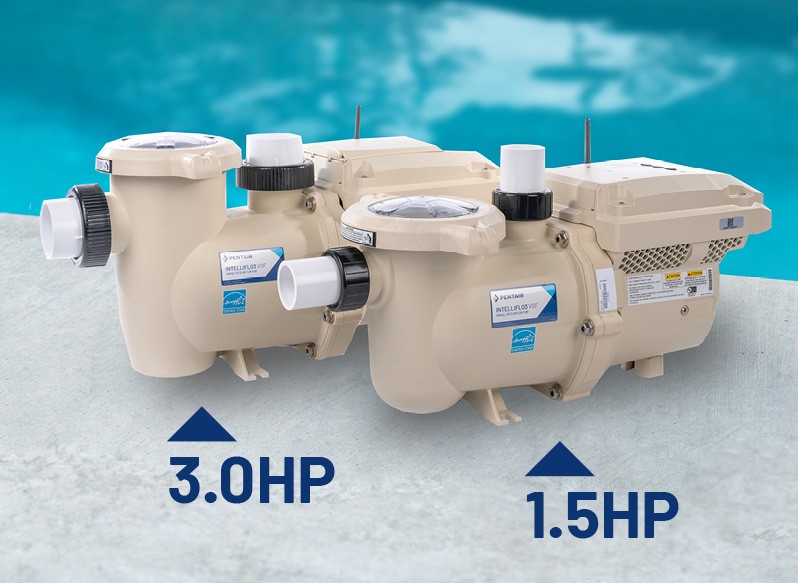
Distinguish a thermal trip from other shutdowns. A thermal trip follows a predictable pattern: the pump runs for a while, quits, then restarts on its own after a cooldown period, often 10 to 30 minutes.
Symptom-to-cause guide. Use these patterns to narrow the problem before you call anyone:
- Trips and resets on its own, motor hot: thermal overload from blocked airflow, restricted plumbing, or long runtime in peak heat.
- Trips and stays off until breaker reset: electrical fault, failed capacitor, or control board issue.
- Runs hot but never trips: restricted airflow or plumbing adding load; the motor is working harder than it should.
- Unusual noise with heat: bearing wear or debris in the impeller, which raises friction and temperature.
- Low flow with heat: clogged filter, blocked impeller, or suction-side air leak forcing the pump to run dry-ish and hot.
- Leaks near the motor: a failed shaft seal lets water into the motor, which corrodes bearings and shortens motor life.
Work through the overheating fixes. Most thermal trips trace back to airflow and runtime:
- Clear the equipment pad. Trim shrubs and move stored items so the motor has open air on all sides.
- Clean the motor vents and fan. Debris and pollen block the cooling fan, especially in coastal yards.
- Run the pump in cooler hours. Early morning and evening operation keeps the motor out of peak heat.
- Shade the equipment. A small shade structure or repositioned pad lowers ambient temperature.
- Check the impeller and filter. A clogged filter or restricted impeller forces the motor to work harder and run hotter.
- Reduce plumbing restrictions. Back-to-back fittings and undersized pipe cause hydraulic losses that add load.
- Match the pump to the pool. An oversized pump on narrow plumbing runs hot and wastes energy.
Environmental and installation factors. Heat is not only about the sun. Humidity slows evaporative cooling on the motor, debris from nearby trees packs into vents, and an equipment enclosure without cross-ventilation traps hot air around the pump.
|
Symptom |
Likely Cause |
First Step |
|---|---|---|
|
Trips and resets on its own, motor hot |
Thermal overload from heat |
Clear vents, cool runtime |
|
Trips and stays off until breaker reset |
Electrical fault or capacitor |
Check breaker and timer |
|
Runs hot but keeps running |
Restricted airflow or plumbing |
Inspect pad and fittings |
|
Unusual noise with heat |
Bearing wear or impeller debris |
Cut power, check impeller |
|
Low flow with heat |
Clogged filter or suction leak |
Check filter and suction side |
|
Leaks near the motor |
Failed shaft seal |
Inspect seal and motor |
Watch out: if the pump trips repeatedly after you have cleared the vents and moved runtime to cooler hours, stop resetting it. Repeated thermal trips can warp windings and turn a cheap fix into a motor replacement. That is the point to call a qualified technician rather than keep troubleshooting.
Pool Pump Repair or Replacement: How to Decide
Repair often makes sense when the motor is sound and one component has failed. Replacement may make sense when the pump is oversized, single-speed, and tripping repeatedly. The decision also depends on pump type, because a variable-speed pump and a single-speed pump fail and run differently in heat.
Single-speed pumps. These run at full rpm whenever they are on, so they build heat fast and draw the most power during peak hours.
Variable-speed pumps. These run at lower rpm for filtration and ramp up only when needed, which cuts heat and energy use.
Balance runtime, water quality, and energy use during heat waves. Hot weather raises chlorine demand and bather load, which tempts owners to run the pump longer.
When to call a qualified technician. Electrical work inside the motor housing, drive electronics, and repeated thermal trips are not DIY territory.
Peerless Pools works with Pentair and other major equipment brands and can help you weigh your options for your setup. See our pool services in Cape May County or estimate your energy savings from a variable speed pump. If you want the equipment details, review our Pentair pool equipment and installation options.
Schedule Your Pool Pump Repair Before the Next Heat Wave
The best time to address a struggling pump is before the next stretch of 90-degree days, not during one. A pump that has tripped once will trip again, and the second failure often lands on a rental turnover weekend.
Peerless Pools has served Cape May County since 2016 as a locally owned team and trained Pentair specialist. We provide weekly pool service and equipment repairs and upgrades for shore homes and rental properties. Read what our customers say, then contact us to schedule service.
If your pump is tripping and you would rather not diagnose it in the heat, let us take a look. We will confirm whether a repair or a variable-speed upgrade is the better call, and we will get your pool circulating again before the next heat wave. Get started with Peerless Pools and keep your equipment running through every summer weekend.
Frequently Asked Questions
How long should you run a pool pump during the summer?
Most residential pools need eight to twelve hours of filtration daily in summer, but the exact time depends on pool volume and pump flow rate. Run the pump during cooler hours, such as early morning or evening, to reduce heat stress on the motor. A variable-speed pump can run longer at lower speed, which improves circulation and lowers energy use. If your pump keeps shutting off before reaching that runtime, address the overheating cause before extending the schedule.
Why is my pool pump humming but not starting?
A humming pump usually means power reaches the motor but the shaft cannot spin. Common causes include a seized motor bearing, a stuck impeller from debris, a failed capacitor, or low voltage. Turn off power at the breaker before inspecting. Try turning the shaft at the back of the motor with a screwdriver; if it will not move freely, the motor likely needs service. Call a qualified technician for pool pump repair if the problem persists, since electrical diagnosis carries shock risk.
What ruins a pool pump fastest?
The biggest killers are restricted airflow, clogged filters, and running the pump dry. A pump in a confined space with blocked vents overheats and trips its thermal protector repeatedly, which shortens motor life. Back-to-back plumbing fittings and undersized pipes force the motor to work harder. Debris in the impeller and a dirty filter also reduce flow and raise heat. Keeping the equipment area clear and the filter clean prevents most premature failures.
How do I know whether my pool pump needs repair or replacement?
Repair makes sense for a failed capacitor, seal, or impeller on a motor under eight years old with no rust or winding damage. Replacement is usually smarter when the motor is older, has failed multiple times, or is oversized for the plumbing. A variable-speed replacement often pays back through lower utility bills. Ask a technician to test the motor and compare repair cost against a new pump, then decide based on age, efficiency, and how often the pump keeps shutting off.
